If you are a small or independent self-storage operator in Australasia, you may be wondering how to expand your business without overextending your resources. The good news? You probably already have space to do it — without buying more land or breaking ground.
As Australasia’s self-storage industry continues to evolve, many operators are rethinking what expansion looks like. It doesn’t always mean building big — increasing square footage or building taller buildings — especially if you’re not sure how large demand is, planning approvals are shifting demands, starting small can be the smartest way to test a market, add capacity and unlock hidden revenue potential without overcommitting.
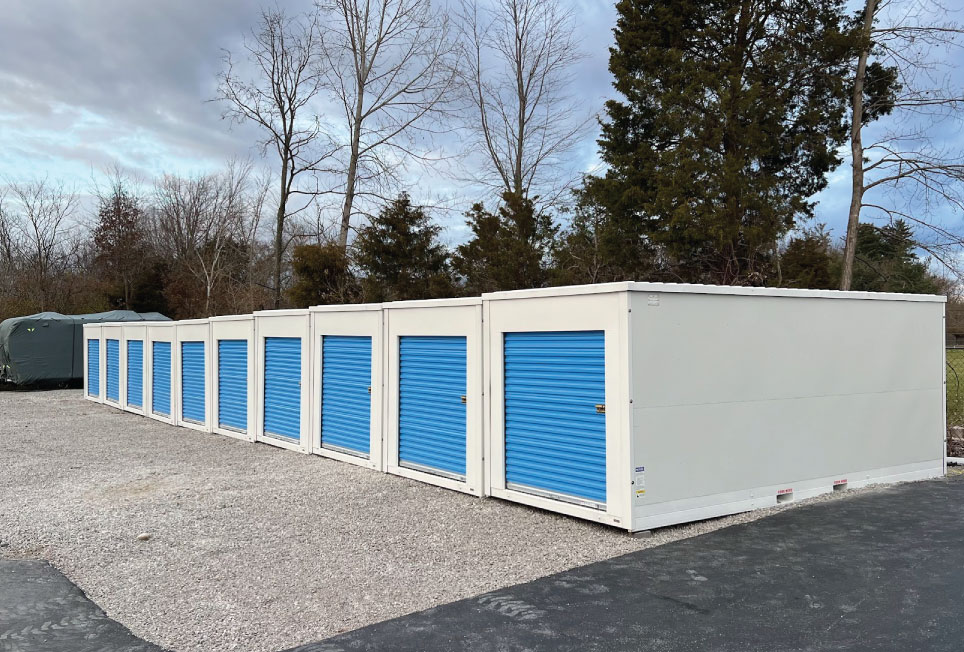
External storage containers are shipped flat-packed in shipping containers. A Minimum Order Quantity (MOQ) is typically set to accommodate the number of units that fit inside, usually around 10 units. This low MOQ provides operators with an affordable and low-risk way to scale.
Most storage already have enough space to accommodate an MOQ. Consider these options:
- Park it: Place units in unused car bays or overflow areas.
- Extend it: Cap the ends of existing buildings.
- Turn it: Position units along fences or narrow driveways.
External storage containers require minimal site preparation, allowing you to transform underutilised areas without lengthy approvals or costly construction.
A phased approach allows you to grow at your own pace while maintaining a predictable cash flow. Start with one container of units, test demand, then reinvest new revenue in the next order. As occupancy funds the next step, minimising upfront costs and reducing reliance on debt.
Storage operators often need smaller units, while regional customers require larger ones. Traditional builds lock in a mix, but external storage containers let you adapt. Start with a size-mix base, then add or swap units based on demand and adjust your offerings accordingly.
External storage containers need only level ground. No foundations, utilities or grading are required. Units ship flat-packed so large forklifts or cranes are not needed. On site assembly is 90 minutes with a small team. With just a forklift, you can transition from delivery to rent-ready in just a few days.
Key Takeaways
- Less risk and more control by growing with demand
- Trial new sites or layouts without overcommitting
- Handle seasonal demand and reconfigure as needed
- Expand when revenue supports it
Real-world results in action
ABC Storage put this model to the test by transforming a vacant lot in Atherg, Georgia into a 542-unit facility using 308 external storage containers. By choosing containers, they cut costs nearly in half, secured fast approvals and had units rent-ready in just six months. With strong occupancy, durability, and 50 leases signed within four months, the project proved that external storage containers are a viable, scalable solution in terms of quality, speed, and cost savings — so much so that ABC has since replicated the model across multiple sites.
The smartest growth is strategic
In today’s market, external storage containers help you unlock land, test demand and control costs. One container is a smart, scalable start — big growth begins small, and the best time is now.