

When planning or expanding a self-storage facility, the unit mix you choose has a direct impact on lease-up speed and long-term revenue. Demand at any site depends on local customer behavior, competitor offerings, and how efficiently you use your available land. A thoughtful blend of unit sizes and configurations helps operators meet market needs while maximizing income.
For facilities using relocatable self-storage units, unit mix decisions become even more strategic. Flexibility, placement, and the ability to adjust over time all play a critical role in performance.
Understanding Storage Demand
A strong unit mix strategy begins with understanding who your customers are and how they actually use storage. Storage demand is driven by local behavior, not industry averages.
Local Demographics Matter
Different communities use storage in different ways, and your unit mix should reflect that.
- Rural or suburban areas
These markets often need larger storage units because customers tend to store household goods, seasonal equipment, business inventory, or vehicles. Larger units like 10x20s are attractive in suburban or rural areas for this reason. - Cities and urban areas
Urban markets and areas with large renter or student populations tend to see more frequent move-ins and shorter rental durations. Smaller units such as 5×5 and 5×10 are often preferred because they offer affordable storage for smaller moves, decluttering, or temporary needs.
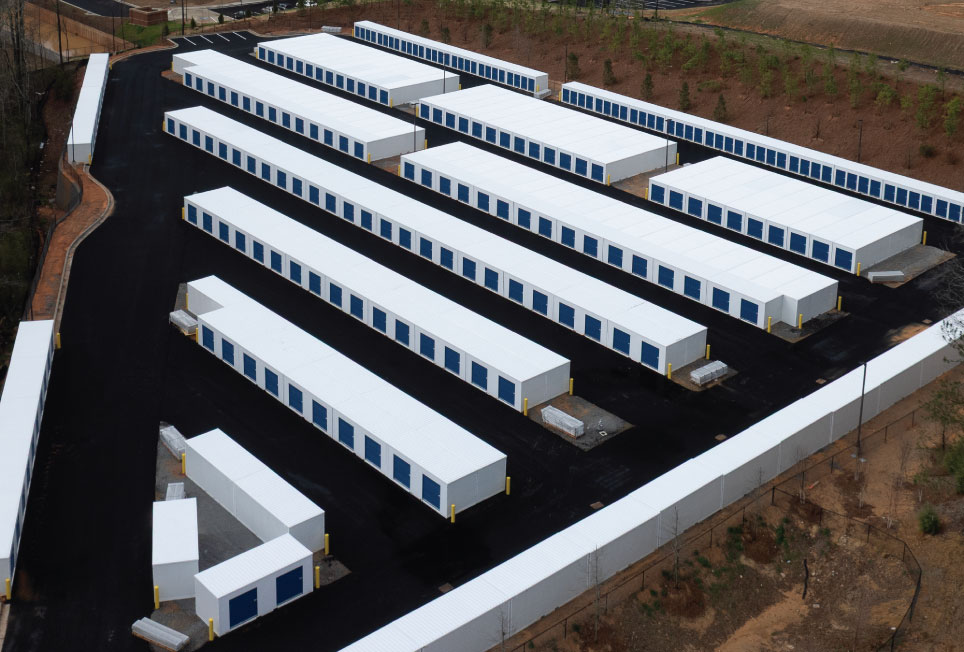
Competitor Analysis is Critical
Before finalizing a unit mix, operators should closely analyze competing facilities in their market.
Questions to ask include:
- Are competitor facilities fully rented?
- Which unit sizes are still available?
- What units are discounted or promoted?
Pro tip: reviewing competitor websites allows you to see real-time availability and pricing by unit size. This can reveal gaps in the market where demand is not being fully met
Understanding competitor supply is one of the most effective ways to avoid overbuilding the wrong unit sizes.
Popular Unit Sizes That Perform
Industry data shows that 5×5, 5×10, and 10×10 units remain the backbone of most successful facilities. The 10×10 size is often considered the “workhorse” because it balances versatility with rental demand.
According to recent industry statistics, the most rented storage sizes by revenue include:
- 10×10 units: About 26% of revenue share
- 10×20 units: around 22%
- 5×10 and 10×15 units: also in demand, but to a lesser extent
This mix reflects how renters use storage: they often want units large enough to hold the contents of a one- to two-bedroom home, but not so large that they pay for unused space.
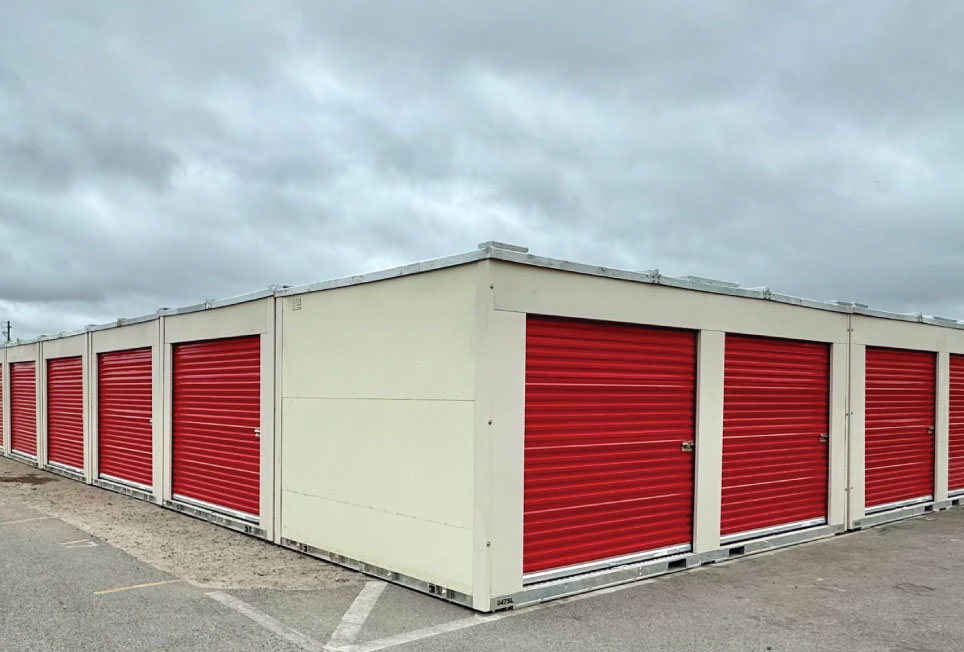
Maximizing Rentable Square Footage with Relocatable Units
A core principle in self-storage design is maximizing rentable space while minimizing unusable land. Irregular parcels, setbacks, easements, and leftover site areas often go unused in traditional development.
This is where relocatable self-storage units add real value.
Relocatable units can be placed in areas that would otherwise remain idle, turning underutilized space into income-producing inventory. This approach allows operators to:
- Add capacity without major site construction
- Activate easements, setbacks, and irregular land
- Expand incrementally instead of overbuilding
By placing units strategically, operators can increase total rentable square footage without expanding the facility footprint.
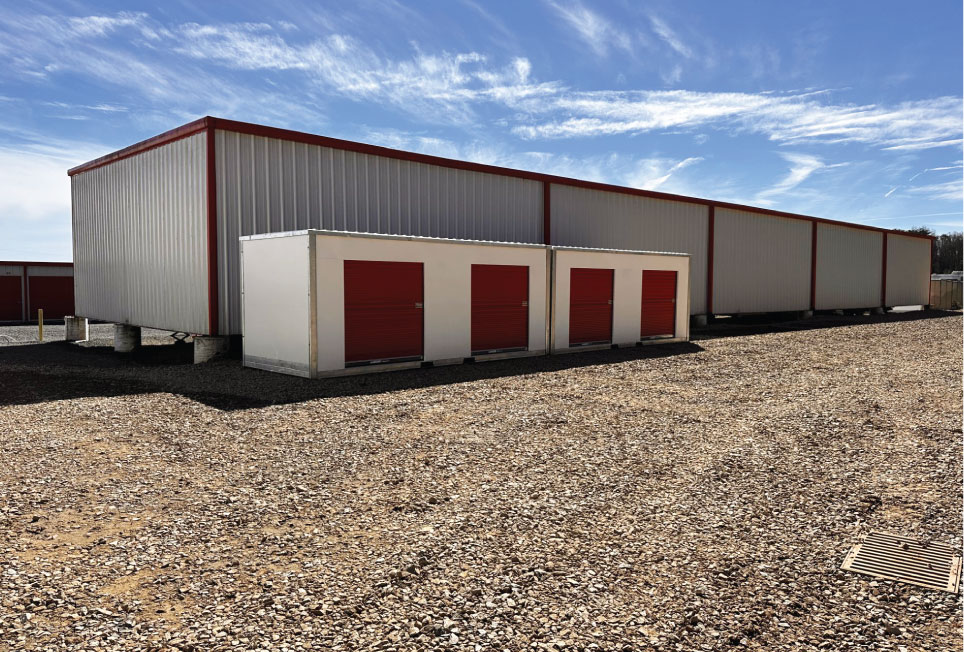
Designing Flexible Units Sizes with Partition Walls
One of the advantages of using Boxwell relocatable units is the ability to adjust unit sizes over time using partition wall systems. Instead of locking in a single configuration, operators can adapt their unit mix as demand becomes clearer.
A 10×20 unit can be left as one large unit or divided into smaller, high-demand sizes such as:
- Two 10×10 units
- Four 5×10 units
- A combination of 5×5, 5×10, or 10×10 units
An 8×20 unit offers similar flexibility and can be configured into:
- Two 8×10 units
- Four smaller 5×8 units
- Mixed-size units to meet local demand for smaller storage options
This flexibility allows operators to respond to real rental data instead of guessing upfront. If smaller units rent faster in a given market, partition walls make it possible to reconfigure space without adding new buildings or removing existing units.
For growing facilities, this approach reduces risk, supports phased expansion, and helps maximize revenue per square foot over time.
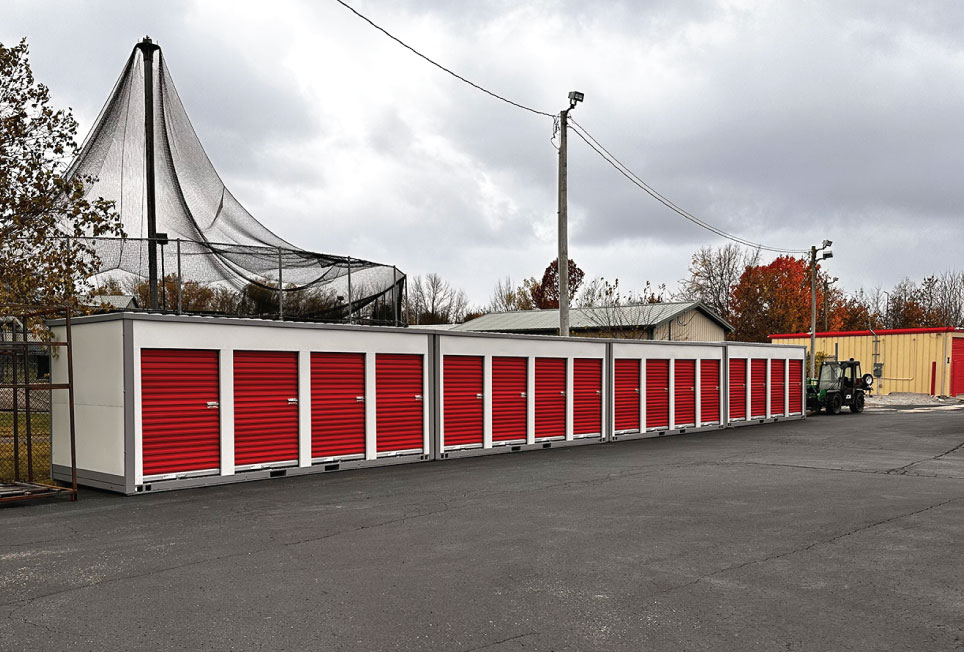
Designing a Unit Mix that Performs
Choosing the right unit mix requires more than following a standard template. It starts with understanding local demand, analyzing competitors, and designing layouts that maximize rentable space.
Data shows that smaller units like 5×5, 5×10, and 10×10 often drive consistent occupancy, while larger units such as 10×20 still play an important role in serving specific customer needs. The strongest facilities balance both.
Whether you are planning a new development or expanding an existing site, designing for flexibility is key. Boxwell relocatable units offer a practical way to test demand, adapt your unit mix, and grow without overbuilding, helping your facility perform today and stay competitive tomorrow.
Boxwell designs, manufactures, and installs industry-leading storage solutions. Our lineup includes relocatable self-storage units, portable containers, hallway systems, and roll up doors. Every product is fully customizable and built to last—trusted by companies across the United States, Canada, Europe, the United Kingdom, Australia, the Middle East, Asia, and beyond.
Boxwell is Built For Your Success. From the start, our mission has been simple: create the best B2B storage products and back them with outstanding customer support. Our clients gain access to dedicated Account Managers, design and installation services, and extensive product warranties.
We are here to help. Contact Boxwell today via our email, sales@boxwell.co, or call 303-317-5850.
