
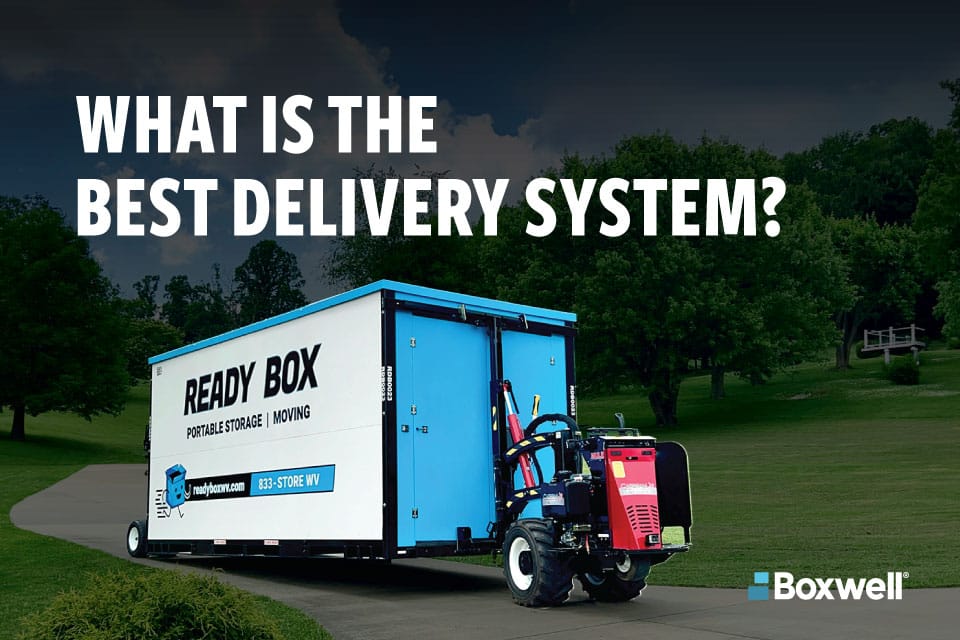
Getting a portable storage container from your facility to a customer’s property is a major part of running a portable storage business. But there isn’t just way to do it.
Portable storage operators have several delivery systems to choose from, ranging from rollback tucks and tilt-back trailers to specialized equipment designed specifically for portable containers. The right choice depends on your container sizes, delivery volume, customer locations, existing fleet, and how you plan to grow.
If you’re starting a portable storage business or re-evaluating your current delivery setup, understanding the different options can help you determine which system makes the most sense for your operation.
Why Your Delivery System Matters
Your containers may be the foundation of your portable storage business, but your delivery equipment is what keeps them moving.
A good delivery setup needs to do more than transport a container from point A to point B. Operators also need to consider container placement, delivery vehicle clearance, how often they’ll move containers, and whether they need to keep customers’ belongings level during transport.
The good news is that there are several ways to approach portable storage delivery.
Let’s look at some of the most common options.
Rollback Trucks
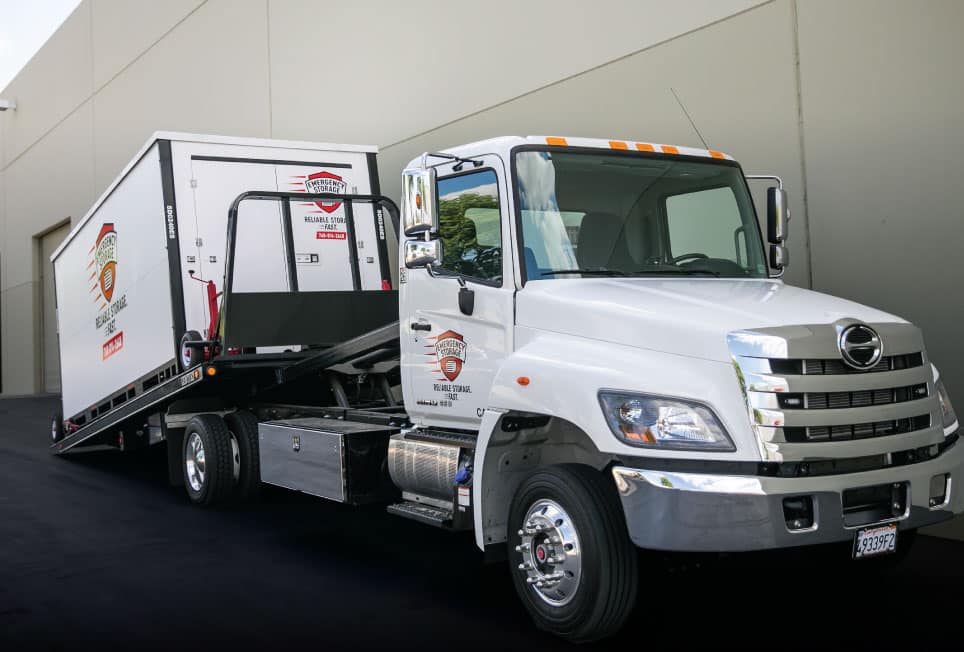
Rollback trucks are one of the more straightforward ways to deliver portable storage containers.
For operators, one advantage is simplicity. The truck itself handles much of the loading, transportation, and unloading process without requiring a separate delivery machine.
Because the bed tilts during placement, the container and everything inside it will also be placed at an angle during part of the delivery process. Rollback trucks also need enough room to maneuver and extend the bed safely, so operators should consider the typical size and accessibility of their customers’ properties, along with container size and weight, when evaluating this type of system.
Rollback trucks can be a practical option for operators whose delivery locations provide enough room and whose business model doesn’t require containers to remain level throughout delivery.
Tilt-Back Trailers
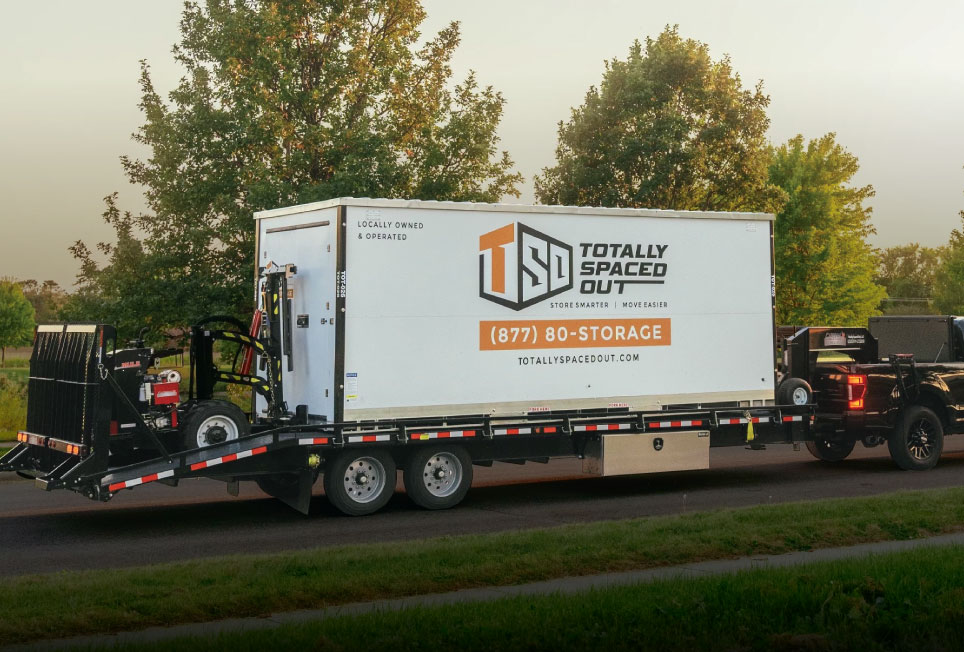
Tilt-back trailers use a similar concept but allow operators to tow the delivery equipment behind a compatible vehicle rather than relying on a dedicated rollback truck.
The trailer tilts toward the ground so the container can be loaded or unloaded. Depending on the setup, a winch or other equipment may be used to help move the container.
For a newer portable storage operation, the trailer-based system may be worth considering because it can allow the tow vehicle to serve other purposes when it isn’t making container deliveries.
As with rollback trucks, operators should consider how much space is required for placement and the fact that the container will tilt during the process.
Horizontal and Level-Lift Systems
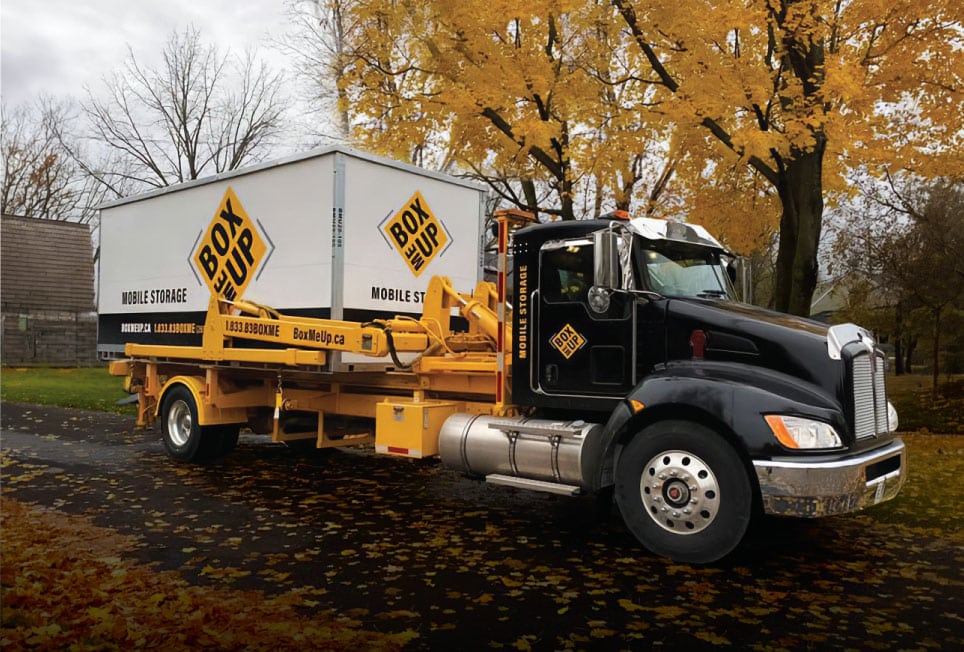
For operators who want to minimize container tilting, horizontal or level-lift systems offer another approach.
These systems lift and lower the container while keeping it relatively level throughout the delivery process. This approach works especially well when customers have already loaded their belongings and operators need to transport the container without significantly changing its angle.
Level delivery can also provide operators with greater control when placing containers in residential driveways and other customer locations.
The tradeoff is that these systems often involve more specialized equipment. Operators should consider the upfront investment, maintenance requirements, compatibility with their containers, and how the equipment fits into their overall fleet.
Mule-Style Delivery System
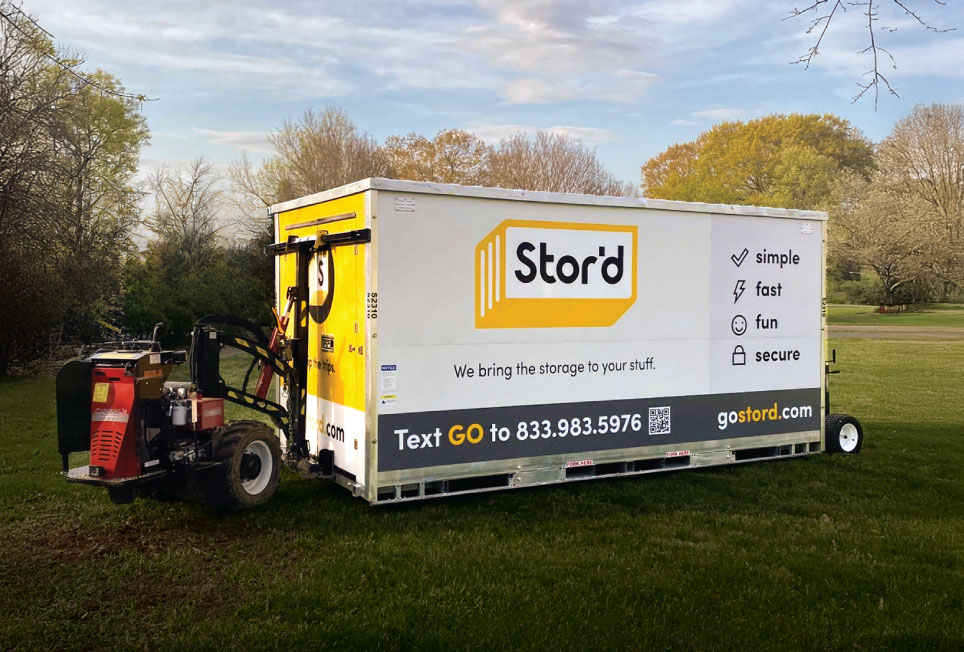
Mule-style delivery equipment is specifically designed to maneuver portable storage containers between a transport trailer and the final placement location.
Rather than positioning the entire truck or trailer exactly where the container needs to sit, the operator can use the Cardinal Mule to move the container during the final stage of delivery. The container remains upright throughout the process.
This can be particularly useful when working with residential properties or locations where maneuverability is important.
For operators making frequent deliveries, the ability to move and position containers independently of the truck or trailer can make a significant difference in day-to-day operations.
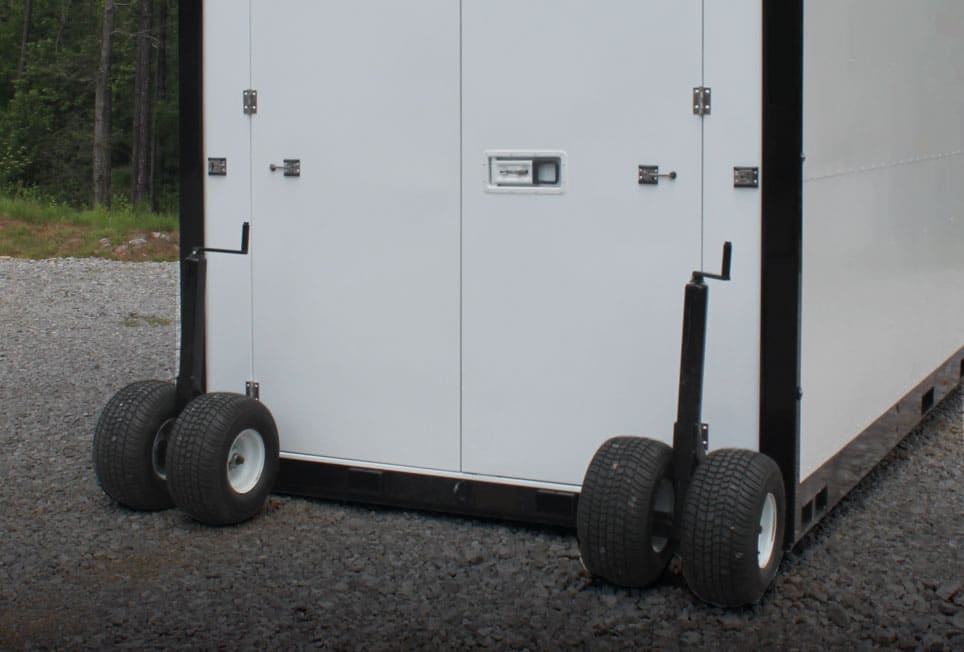
Dolly Wheel Systems
Mule-style delivery equipment is specifically designed to maneuver portable storage containers between a transport trailer and the final placement location.
Rather than positioning the entire truck or trailer exactly where the container needs to sit, the operator can use the Mule to move the container during the final stage of delivery. The container remains upright throughout the process.
This can be particularly useful when working with residential properties or locations where maneuverability is important.
For operators making frequent deliveries, the ability to move and position containers independently of the truck or trailer can make a significant difference in day-to-day operations.
Semi-Trailers and Flatbeds
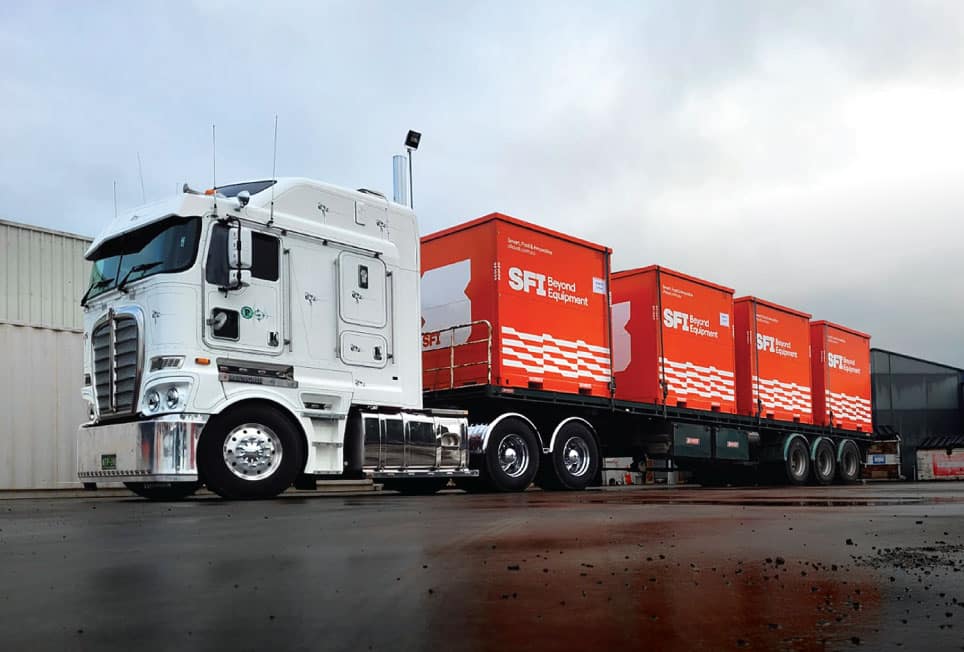
For larger-scale transportation, semi-trailers and flatbeds offer another option.
These can be useful when an operator needs to transport multiple containers at once or move containers between facilities. They may also be used for containers that aren’t practical to transport using smaller delivery systems.
The biggest consideration is what happens once the containers reach their destination.
Unlike some dedicated portable storage delivery systems, a traditional flatbed may require additional equipment, such as a forklift or another container-moving system, to unload and position the units. Large trucks also require more room to maneuver.
Because of this, flatbeds and semi-trailers may make more sense for bulk transportation or facility-to-facility moves than individual residential deliveries.
How Do You Choose the Right Portable Storage Delivery System?
There isn’t a single delivery system that works best for every portable storage business. Before investing in equipment, consider how your operation will actually use it.
Container Size and Weight
Start with your containers. Different delivery systems have different capacities and compatability requirement. Consider not only the empty weight of the container but also how heavy it could become once fully loaded.
Typical Delivery Location
Think about where most of your customer base is located. Are you primarily delivering to wide commercial lots and construction sites, or are you navigating residential areas, narrow driveways, fences, landscaping, and other obstacles?
A system that works perfectly in an open lot may be much more difficult to use in a tight residential space.
Level vs. Tilted Delivery
Consider what happens to the customer’s belongings during delivery. Rollback and tilt-back systems intentionally place the container at an angle during loading and unloading. Horizontal lifts, level lifts, and Mule-style systems are designed to keep the container more level.
Neither approach automatically makes one system better than another, but it is an important operational difference.
Your Existing Fleet
Before purchasing an entirely new setup, look at what you already own. If your business already operates trucks or trailers that can safely support a compatible delivery system, you may be able to incorporate those assets into your portable storage operation.
For a new business, this can also help determine whether investing in a dedicated truck or a trailer-based system makes more sense.
Delivery Volume
How many containers do you expect to move each day, week, or month? A smaller operator making occasional deliveries may have very different equipment needs than a company managing hundreds of portable storage containers across a large service area.
Your delivery system should work for where your business is today while giving you room to grow.
Total Cost of Ownership
The purchase price is only one part of the equation. Operators should also consider fuel, maintenance, repairs, insurance, training, vehicle requirements, and the number of employees needed to complete a delivery. Sometimes a system with a higher upfront cost may improve efficiency over time. In other cases, a simpler setup may be all an operation needs.
Build Your Containers Around How You Operate
Your delivery system and containers should work together from the start. Portable storage containers move repeatedly throughout their service life, making transportation an important part of the initial planning process. Features such as reinforced bases, fork pockets, proper lifting points, and compatibility with common delivery equipment help operators easily integrate containers into their existing operations.
Boxwell portable storage containers work with a variety of common delivery methods, including Cardinal Mule systems, horizontal lifts, hand-crank dolly wheels, rollback trucks, tilt-back trailers, and level-lift systems with chassis. This flexibility gives operators the freedom to choose the delivery equipment that best fits their business instead of relying on a single method.
Finding the Right Fit for Your Portable Storage Business
There isn’t one “best” way to deliver a portable storage container. A rollback truck may make perfect sense for one company, while another operator may prioritize level delivery and maneuverability. A growing fleet may even use multiple delivery systems for different types of customers and locations. The goal is to find a setup that fits your containers, service area, delivery volume, budget, and long-term plans. By considering transportation early, portable storage operators can build a delivery process that is practical today and ready to grow alongside the business.
Boxwell portable storage containers are designed for real-world transportation and compatibility with a range of common portable storage delivery systems. Whether you’re starting a portable storage business, expanding an existing fleet, or evaluating new delivery equipment, our team can help you find a container setup that fits your operation.
FAQ
What is a portable storage delivery system?
A portable storage delivery system is the equipment used to transport, place, and retrieve portable storage containers. Depending on the setup, this may include a truck, trailer, lift, dolly system, or specialized container-moving equipment.
What are the different ways to deliver portable storage containers?
Common portable storage delivery methods include rollback trucks, tilt-back trailers, horizontal lifts, level-lift systems, Mule-style systems, dolly wheels, flatbeds, and semi-trailers. The right option depends on container size and weight, delivery location, available space, and the needs of the operator.
What is the best delivery system for a portable storage business?
There isn’t one system that is best for every business. Operators should consider container size and weight, delivery frequency, customer properties, available space, existing vehicles, budget, and whether keeping the container level during delivery is a priority.
Do portable storage containers need to stay level during delivery?
Not necessarily. Some systems, such as rollback trucks and tilt-back trailers, tilt the container as part of the loading and unloading process. Other systems are designed to keep the container relatively level. Operators should consider the types of items their customers typically store and the experience they want to provide.
Boxwell designs, manufactures, and installs industry-leading storage solutions. Our lineup includes relocatable self-storage units, portable containers, hallway systems, and roll up doors. Every product is fully customizable and built to last—trusted by companies across the United States, Canada, Europe, the United Kingdom, Australia, the Middle East, Asia, and beyond.
Boxwell is Built For Your Success. From the start, our mission has been simple: create the best B2B storage products and back them with outstanding customer support. Our clients gain access to dedicated Account Managers, design and installation services, and extensive product warranties.
We are here to help. Contact Boxwell today via our email, sales@boxwell.co, or call 303-317-5850.