

Across the self-storage industry, AI is quickly becoming part of how owners market and run their businesses. Content is easier to create, faster to publish and more polished.
In many ways, that’s a positive shift. But in a product-driven industry, there’s a line between helpful and misleading. And lately, that line has started to blur.
Where AI Adds Value
AI helps operators move faster and run more efficiently across both marketing and day-to-day operations.
On the marketing side, teams use AI to draft website copy, create social posts, brainstorm campaigns, and streamline email communication. It helps maintain consistency and produce content at a much faster pace.
On the operations side, AI supports automated customer responses, pricing adjustments, lead follow-up, and system-level management tools. These tools help facilities run more efficiently behind the scenes.
When used correctly, AI can improve both the speed and consistency of your business without changing the substance behind it.
Where AI Starts to Breakdown
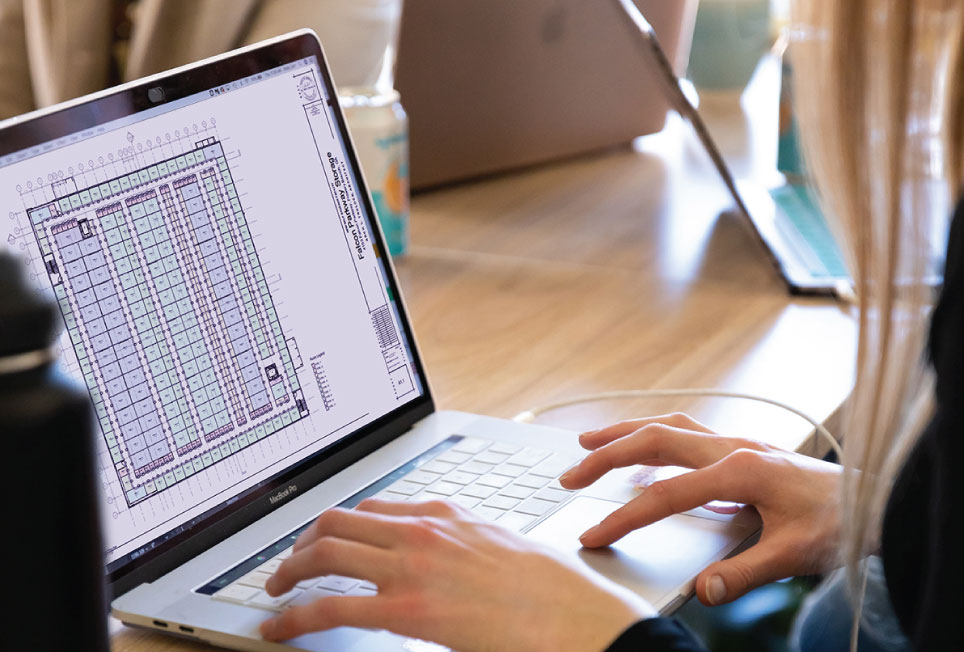
We’re seeing websites, ads, and social media content built entirely on generated visuals. Storage facilities that look perfect but don’t exist. Units that don’t match real-world builds. Layouts that wouldn’t function in practice.
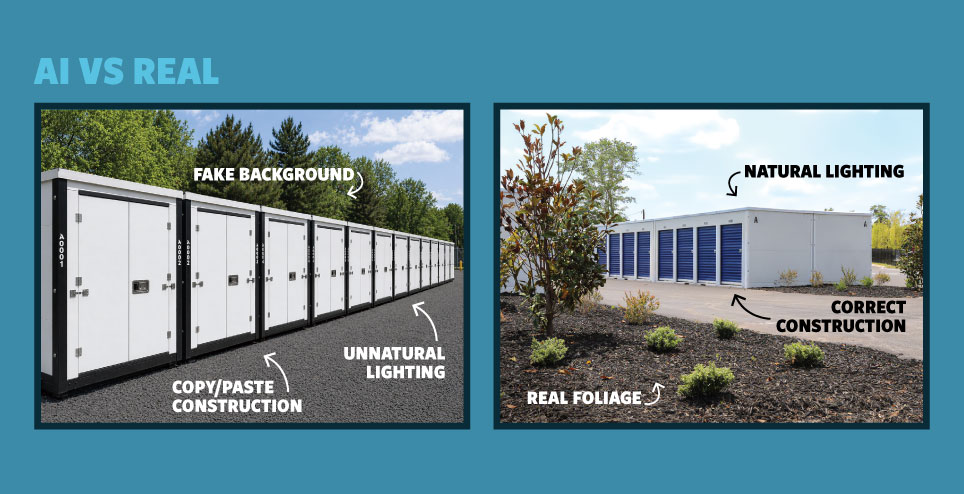
There are also more subtle signs of breakdown. Materials that don’t match real specifications. Door placements that wouldn’t be useable. Inconsistent proportions. Repeated visual patterns that don’t reflect how facilities are actually constructed.
At a glance, it looks impressive. But self-storage isn’t a digital product. Customers are making decisions based on physical space. What they see online sets expectations for what they’ll experience in person.
And while that may work in concept-driven industries, it creates risk in environments where customers expect to see exactly what they’re investing in.
When expectations don’t match reality, trust breaks down. More importantly, it creates friction the moment a customer arrives and realizes what they saw isn’t what exists. At that point, the problem isn’t just the product—it’s the expectation that was set.
Why Accuracy Matters More Than Ever
In industries built around physical infrastructure, accuracy isn’t optional. It’s foundational. When a customer sees something online, they’re forming an expectation. Even if they don’t fully understand the technical details, they are building a mental picture of what they’re about to experience.
If that expectation is inaccurate, it creates doubt. If it feels misleading, it creates frustration. That breakdown happens fast. And once a customer starts questioning what they’ve been shown, it doesn’t just affect that one interaction. It changes how they view your business.
This is why trust matters so much. It influences not just first decisions, but long-term relationships, referrals, and overall reputation.

How to Spot Misleading AI Content
As AI-generated visuals become more common, it’s important to know what to look for. Often, the signs are subtle:
- Too perfect visuals that don’t reflect reality
- Unnatural lighting that feels staged or cinematic
- Incorrect construction details that wouldn’t work in real builds
- Unrealistic layouts that wouldn’t function
- Repeating patterns with no natural variation
- Copy/paste elements across the image
- Inconsistent spacing between repeating elements; windows, columns, doors, etc.
- Impossible hardware that couldn’t exist
- Nonsensical text or numbers (misspellings, fake symbols)
- Missing real-world context (no surroundings, wear, or environment)
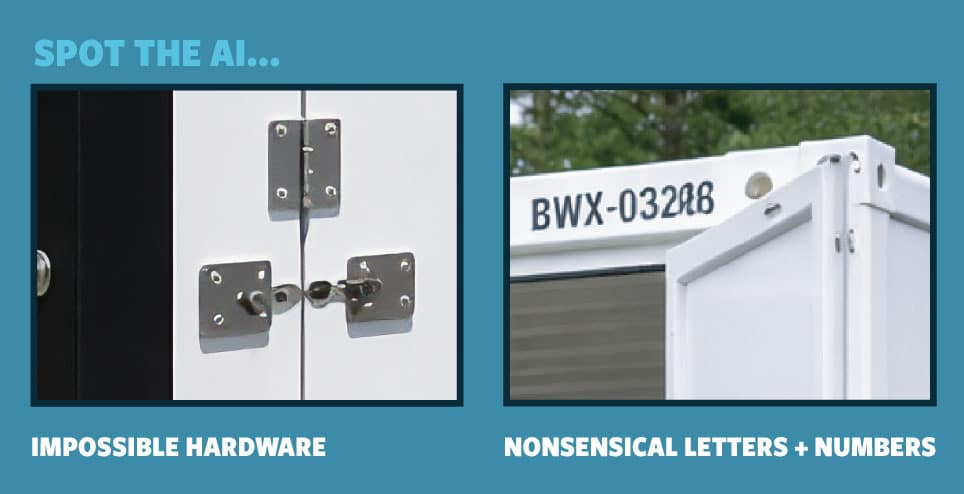
Individually, these details may seem small. Together, they can signal that what you’re seeing isn’t an accurate representation of the real product.
If you’re evaluating storage solutions, don’t just rely on polished visuals. Ask for real project photos, real installations, and real-world examples.
Seeing how a product performs in an actual environment will tell you far more than any rendering or generated image ever could. That’s where real project galleries and case studies become valuable.
Using AI Responsibly
AI isn’t going anywhere. Used well, it’s a valuable tool for your business. But there’s a difference between using AI to support your business and using it to replace reality.
A responsible approach is straightforward:
- Use AI to generate ideas and support content
- Use real photos and real examples when representing physical products
- Prioritize accuracy over aesthetics
AI can also be used in ways that add value without altering reality, such as improving writing clarity, organizing information, helping with customer communication, or analyzing performance data. Not all uses of AI carry the same level of risk. When it’s used behind the scenes, it can improve efficiency. When it’s used to represent physical products, accuracy becomes critical.
A Simple Standard
In a product-driven industry, there shouldn’t be guesswork. What you see should match what you get.
Our Standard
We believe what you see should reflect what’s actually built.
- Real products, not concepts
- Real installations, not simulations
- Real environments, not generated scenes
- Real-world performance, not idealized visuals
Because in self-storage, expectations are not theoretical. They’re physical. And the easiest way to test that is by looking at what’s been built. As AI continues to be a part of the industry, the difference won’t be who uses it; it will be how it’s used. The operators who prioritize accuracy will be the ones who earn long-term trust.

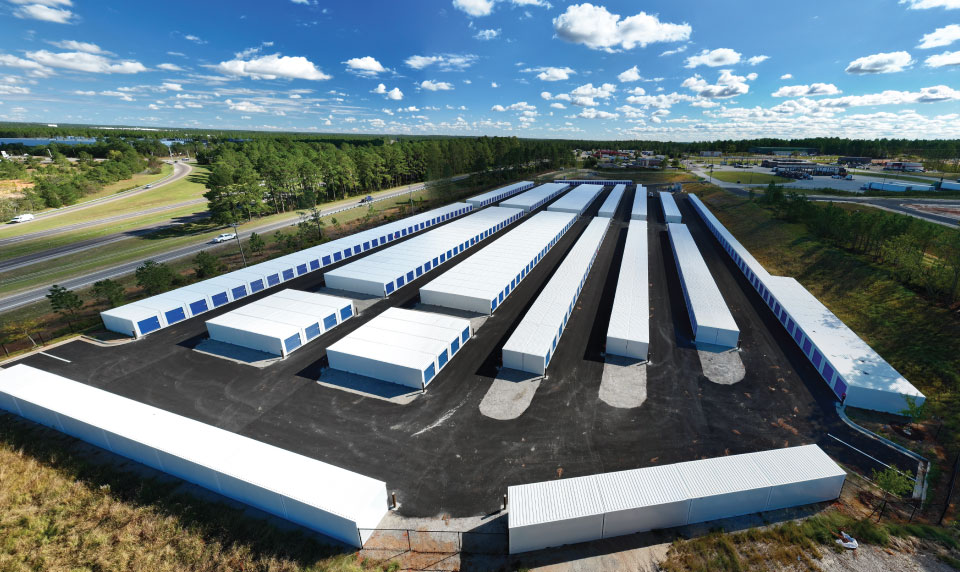
Boxwell designs, manufactures, and installs industry-leading storage solutions. Our lineup includes relocatable self-storage units, portable containers, hallway systems, and roll up doors. Every product is fully customizable and built to last—trusted by companies across the United States, Canada, Europe, the United Kingdom, Australia, the Middle East, Asia, and beyond.
Boxwell is Built For Your Success. From the start, our mission has been simple: create the best B2B storage products and back them with outstanding customer support. Our clients gain access to dedicated Account Managers, design and installation services, and extensive product warranties.
We are here to help. Contact Boxwell today via our email, sales@boxwell.co, or call 303-317-5850.